Astaxanthin and Sea Algae for the Eyes: A Plain-English Guide
Seaweed and microalgae show up in more and more eye supplements. Some of these ingredients have real research behind them, others mostly a long history as food. Here is what each one is, what is known in general terms, and where the evidence stops.
Many marine pigments, from the pink of salmon to the brown of kelp, are carotenoids made by algae. That is why algae appear in eye supplements – and why it pays to ask how much of each pigment a capsule really holds.
November 2026
Many marine pigments, from the pink of salmon to the brown of kelp, are carotenoids made by algae. That is why algae appear in eye supplements – and why it pays to ask how much of each pigment a capsule really holds.
Why sea algae ended up in eye supplements
Algae are the original makers of many pigments that animals cannot produce themselves. The pink of salmon and shrimp, for example, comes from astaxanthin that starts in microalgae and moves up the food chain. Seaweeds make their own pigments too, such as fucoxanthin, which gives brown kelp its colour.
Several of these pigments are carotenoids, the same broad family as the lutein and zeaxanthin found in the eye's macula. That family resemblance is the main reason supplement makers turned to the sea – but resemblance is not the same as proof that a pigment does the same job.
The ingredients, one by one
Astaxanthin – a red-orange carotenoid, usually taken from the microalga Haematococcus pluvialis. It is a strong antioxidant in the lab, and it is the sea ingredient with the most eye-related research, mostly on eye comfort and tired eyes after long close work. Results have been encouraging in some studies and modest in others.
Fucoxanthin – the brown pigment of kelp and wakame. Research on it has focused on antioxidant and metabolic questions; direct research on the eyes is limited.
Ecklonia cava – an edible brown seaweed from Korea and Japan, studied mainly for its polyphenols, called phlorotannins. Eye-specific evidence is thin.
Spirulina and chlorella – blue-green and green microalgae sold as whole-food powders. They contain protein, chlorophyll and pigments such as phycocyanin and small amounts of carotenoids. They are best seen as general nutrition rather than an eye ingredient.
Kelp, wakame and nori – everyday sea vegetables, notable for their minerals and especially for iodine, which is useful in the right amount and a problem in excess.
Sea buckthorn oil – from the orange berries of a hardy shrub; it contains carotenoids and omega-7 fatty acids and has been looked at for dry-eye comfort.
What makes a sea-algae formula worth a look
If you are comparing products built on these ingredients, check:
- Disclosed amounts – especially for astaxanthin. A label that hides doses behind a proprietary blend does not let you compare products.
- The source of astaxanthin – natural astaxanthin from Haematococcus pluvialis is the form most often used in research.
- Iodine – formulas with kelp should ideally state iodine content, since it can add up with other supplements and iodised salt.
- Purity – seaweed and algae can absorb heavy metals from polluted water, so testing and sourcing matter.
- A clear refund policy – how long, from when, and what you must send back.
What these ingredients cannot do
None of these nutrients reverses vision loss, replaces glasses or treats cataracts, glaucoma or macular degeneration. Be cautious with any sales page that promises restored or sharper sight from a seaweed formula.
The best-documented nutrition for people with intermediate age-related macular degeneration is a different combination – lutein, zeaxanthin, vitamins C and E, zinc and copper, the formula known as AREDS-2 – and it should be discussed with an eye doctor. Sea-algae formulas are a separate category.
Who might be interested
Adults who already like the idea of algae-based nutrients may find these ingredients appealing, for example if you:
- Spend long hours on screens or close-up work and want a daily nutrient routine
- Eat little seafood or seaweed and are curious about these marine pigments
- Prefer one capsule to several separate supplements
- Have no thyroid condition and do not take blood thinners – or have cleared it with your doctor
How to judge a sea-algae eye supplement
List every ingredient and note which ones have a stated amount and which sit inside a proprietary blend.
Haematococcus pluvialis is the natural source most used in research. Without a stated amount, you cannot compare it with other products.
Kelp-based products can add a lot of iodine. If you have a thyroid condition, take the label to your doctor before starting.
Seaweeds are healthy foods, but being healthy food is not proof of an effect on the eyes. Be wary of any promise of restored sight.
Note how many days you have, whether they count from purchase or delivery, and what you must send back.*
Where OptiPlax fits
If you have read this far, you know what to look for in a sea-algae formula: astaxanthin from a natural source, a clear picture of the iodine question, and realistic expectations about what algae can do.
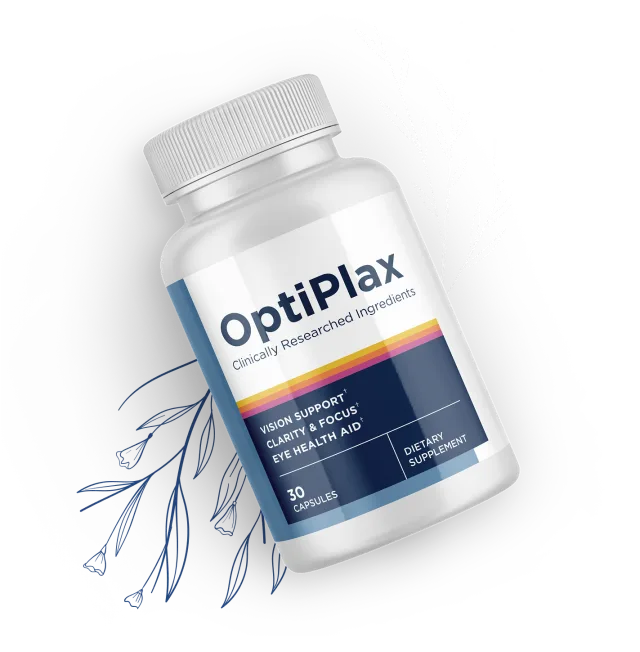
OptiPlax is built around exactly these ingredients. According to the maker, it combines nine marine and algae ingredients in one daily capsule for vision support.*
Here is what the label shows:
- Astaxanthin 2% from Haematococcus pluvialis algae*
- Kelp, wakame, nori and Ecklonia cava, plus a kelp extract standardised to 10% fucoxanthin*
- Chlorella, spirulina and sea buckthorn oil to round out the blend*
- One capsule a day, made in the USA in an FDA-registered, GMP-certified facility, according to the maker
- Free US shipping on 3 and 6 bottles, one-time payment, no subscription, and a 60-day money-back guarantee from delivery
To be clear about what it does not offer: all nine ingredients share one 500 mg proprietary blend, so the label does not say how much astaxanthin – or iodine – a capsule contains. The label lists no lutein, no zeaxanthin and none of the AREDS-2 vitamins and minerals. OptiPlax is not a treatment for macular degeneration, cataracts, glaucoma or any eye disease, and it does not replace glasses or prescribed care.
If you want to try it, the 2-bottle package covers roughly the 60-day guarantee period, while the 3- and 6-bottle packages bring the price down to $69 or $49 per bottle.
Choose your OptiPlax package
Prices as listed on the maker's order page. Free US shipping on 3 and 6 bottles. 60-day guarantee on every package.
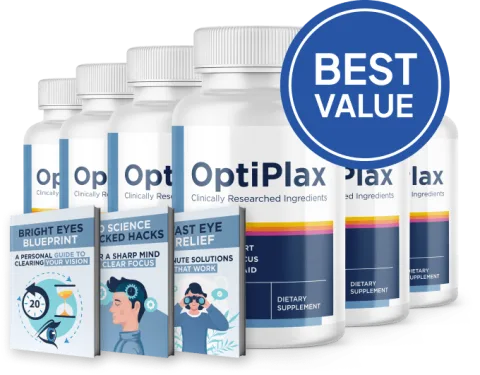
6 bottles
- Lowest price: $49 per bottle instead of $179
- You save $780 on the list price
- Free US shipping
- 3 free e-books
- 60-day guarantee from delivery

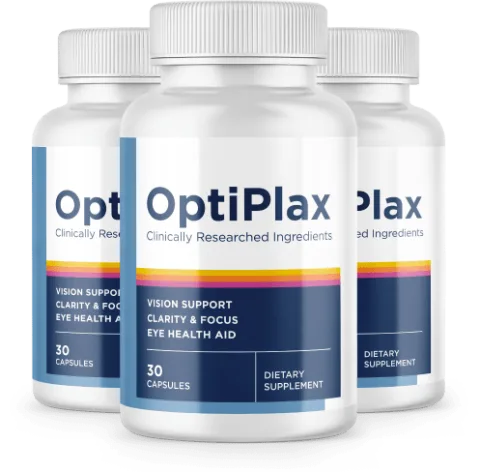
3 bottles
- $69 per bottle instead of $179
- Free US shipping
- 60-day guarantee from delivery
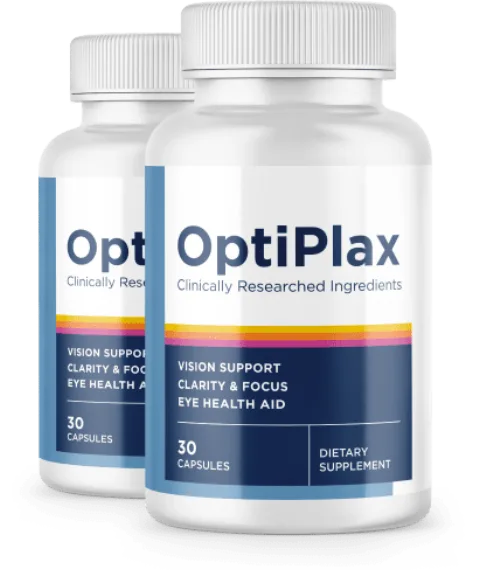
2 bottles
- Two months to try it
- 60-day guarantee from delivery
- Shipping $9.99
🔒 Each button opens the maker's order page · Secure BuyGoods checkout · Card or PayPal · One-time payment, no subscription
60-day money-back guarantee
The maker of OptiPlax gives you 60 days from the day your package is delivered to decide whether to keep it.
To ask for a refund, e-mail the maker at contact@optiplax-product.com with “Refund Request” in the subject, then send back all bottles – empty or not – with the packing slip to OptiPlax, 285 Northeast Ave, Tallmadge, OH 44278. Return shipping is paid by you and is not refunded.
Common Questions About Astaxanthin and Sea Algae
Is astaxanthin good for the eyes?
Astaxanthin is the most studied sea-algae ingredient for eye comfort and eye fatigue, with some encouraging results. It is not a treatment for any eye disease, and the evidence is not strong enough to promise any particular effect.
Is it safe to take kelp every day?
Kelp contains iodine, sometimes in large amounts. For most healthy adults small amounts are fine, but people with thyroid conditions or on thyroid medication should ask their doctor before taking a kelp supplement daily.
Do spirulina and chlorella help eyesight?
They are nutritious algae, but there is little research on them for the eyes specifically. Think of them as general nutrition. Both contain vitamin K, which matters if you take warfarin.
Is a sea-algae supplement the same as an AREDS-2 formula?
No. AREDS-2 is a specific mix of lutein, zeaxanthin, vitamins C and E, zinc and copper. Sea-algae formulas use different ingredients and should not be treated as a substitute.
What if OptiPlax is not for me?
OptiPlax has a 60-day money-back guarantee from delivery. You e-mail the maker with “Refund Request” in the subject and return all bottles, opened or not, with the packing slip; return shipping is at your cost.